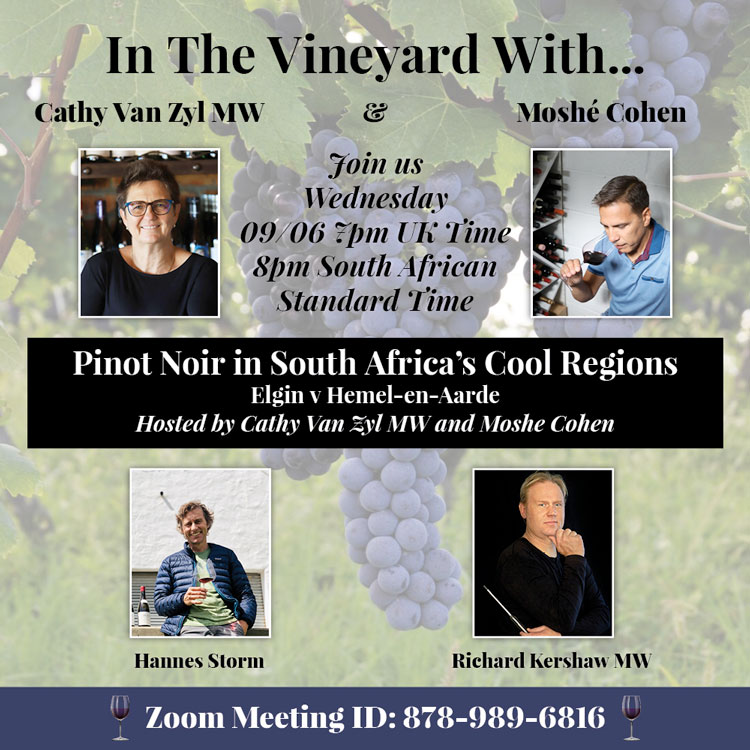
Pinot Noir in South Africa’s Cool Regions – Elgin v Hemel-en-Aarde – Virtual Event

Topic: Pinot Noir in South Africa’s Cool Regions, Elgin v Hemel-en-Aarde. With guests Hannes Storm and Richard Kershaw MW. Hosted by Cathy Van Zyl MW and Moshe Cohen.
Time: Wednesday 9th June 7pm UK Time, 8pm South African Standard Time

After a long break, I’m pleased to let you know about our next live Webinar, Cathy Van Zyl MW and myself will have the pleasure of hosting two exciting winemakers, each representing their respective cool (in more ways than one…) regions. Hannes Storm will talk about his Hemel-En-Aarde Pinot Noir and Richard Kershaw MW will tell us all about his Pinot Noir, from Elgin.

Cathy and I encourage you to get any bottle of Storm or Kershaw’s fantastic Pinot Noir that you can lay your hands on and let us know what is in your glass during the session.
Episode 37 – Kate McIntyre MW – Moorooduc Estate- Mornington Peninsula, Australia


Listen to my chat with Kate McIntyre MW from Moorooduc Estate, in the Mornington Peninsula, Victoria, Australia.

Kate was telling me about her parents’ decision to buy land and plant a vineyard on the Mornington Peninsula in the early 80’s.

About the Chardonnay and Pinot Noir they’re making. Her way through wine and her long journey to become a master of Wine.

Her inspirations from elsewhere in the world of wine and much more.

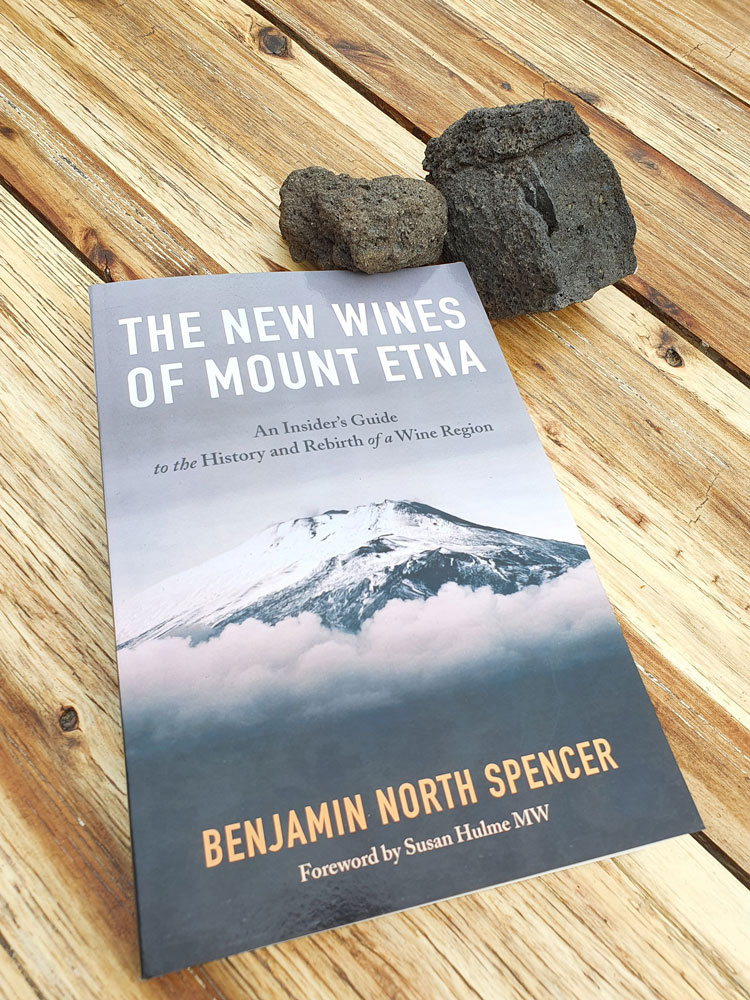
Episode 36 – The New Wines of Mount Etna with Benjamin Spencer – Part 2


In this episode (part2 of 2), Ben was able to address some question presented by some friends of the podcast and the Etna Wine School. Issues we covered: growing vines and making wines on an active volcano, the different aspects of the mountain and the micro climates, soil types, training methods… Pistachios, favourite food and wines pairings, global warming, sparkling wines of Etna and more. Press Play and enjoy !

Interview with Anselme Selosse

Q1. Joining your father in 1974 , what was the catalyst that influenced you to work with nature?
In 1974 when I came back to the estate, there weren’t two ways of practicing viticulture. One that respected the environment and the other that respected it less. Our viticulture had evolved as science had moved forward, and no one questioned that progress. So that was the introduction since the very start of the 1960s, when chemical synthetic molecules substituted chemical – when I say synthetic chemistry I mean organic chemistry – mineral chemistry molecules.

Continue reading →

Top
In The Vineyard With