|
Getting your Trinity Audio player ready...
|
Words and Images by Andrea Lemiuex
Infographics by Empathia Creative
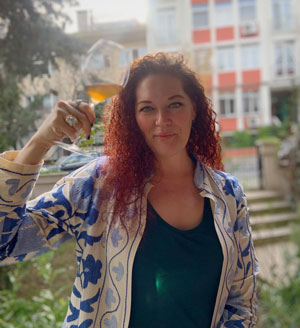
A casual wine drinker for years, Andrea’s “come to wine” moment happened, paradoxically, in Turkey. Her journey began when she discovered that Turkey did make wine, that it could make very good wine, and that it had a rich tapestry of native grapes. Since this revelation Andrea has devoted herself to learning about and proselytizing Turkish wine, while giving some love to other underappreciated wine countries and garnering a few formal wine certifications along the way. She founded The Quirky Cork, a website devoted in large part to Turkish wines and her first book, A Turkish Wine Journey, will be available soon.
Turkey. The mention of this country evokes thoughts of sultans and harems, sticky sweet Turkish delights, thick coffee, and hot air balloon rides over the fantastical ‘fairy chimney’ cave homes of Cappadocia. Wine is not the first thing to come to mind. Nor is it usually the fourth or the tenth. And yet, Turkey is, and for thousands of years has been, a wine producing country.
The country is home to the 5th largest vineyard area in the world with 448,000 hectares under vine. That’s more than the USA, Argentina, Portugal, South Africa, Australia etc. It ranks 6th in global grape production producing some 4.2 million tons of grapes annually.
So why isn’t Turkey more well-known as a wine producer? Well for one reason, a mere 3% of grapes is used for wine and rakı production. Where do the rest go? Table grapes and pekmez (grape molasses) take up a lot of the crops. In addition, Turkey is one of the largest exporters of raisins in the world.
Today, Turkey produces approximately 8 million litres of wine annually. There are some 150 wineries making wines in all styles (still, sparkling, sweet, and fortified) with both domestic and international grape varieties. International grapes have a near stranglehold on the wine industry. Syrah is one of the top three most-widely planted grapes here. You would be hard pressed to find a winery that does not make a Bordeaux blend of some sort. And yet. Turkey is home to a vast and rich array of native grapes, 1244 and counting.
Six grapes make up the backbone of wine production (with native vs international grapes): Boğazkere, Bornova Misketi, Emir, Kalecik Karası, Narince, Öküzgözü, and Sultaniye. The latter, Sultaniye, is in fact not even a vitis vinifera but a table grape. Wineries that do use domestic grapes for wine production will have at least one of these in their portfolio.
If the count of unique native varieties is accurate, it would be more than Italy, French, and Spain combined. Unfortunately, currently only a little more than 40 of these grapes are used in wine production. However, thanks to the curiosity and dedication of a small handful of winemakers and winery owners here, more and more grapes native to Turkey are being resuscitated. Wineries giving their effort to native grapes can be divided into two groups: those actively seeking out and reinvigorating forgotten grapes and those expanding the scope of lesser appreciated grapes.
Those wineries actively seeking out lost grapes include Gelveri, Paşaeli Wines, Likya, Şaraplar Antioche, Chateau Nuzun, Kuzeybağ Şarapçılık, and Gordias. And we have to start this topic with Gelveri.
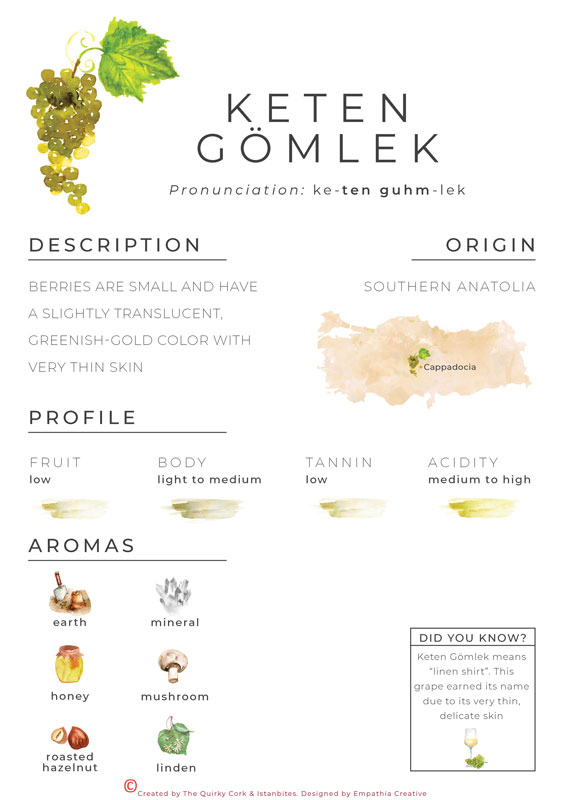
 Gelveri’s rare grape wines were not the first I had. While the owners Udo Hirsch and Hacer Özkaya established their wines in 2002, I personally had never heard of them or their grapes. It wasn’t until I met Hirsch by coincidence at a wine fair in Tbilisi, Georgia in 2017 that I’d heard of them. And I wasn’t the only one. Gelveri wines are made in very small quantities. Sometimes they produce less than 200 bottles of a given grape and before this year they were almost impossible to find outside their winery. Tucked in the wilds of eastern-central Turkey (not terribly far from Cappadocia), Hirsch hunts down grapes around the village. Sitting at 1500 meters in volcanic tuf soils, most of these grapes are ungrafted and have never heard of phylloxera. In addition to making wine, he also works with agricultural research institutes in Turkey on ampelographic studies. Thanks to Gelveri, we now know about and have wine from grapes such as: İt Üzümü (eet ew-zewm-oo), Keten Gömlek (ke-ten guhm-lek), Kızıl Üzüm (kihz-ihl ew-zewm), Koku Üzüm (co-coo ew-zewm), and Taş Üzüm (tash ew-zewm).
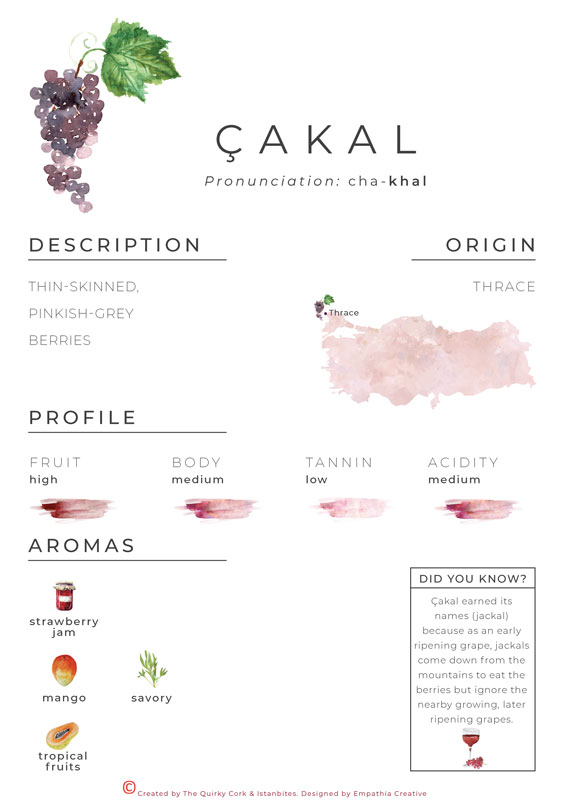
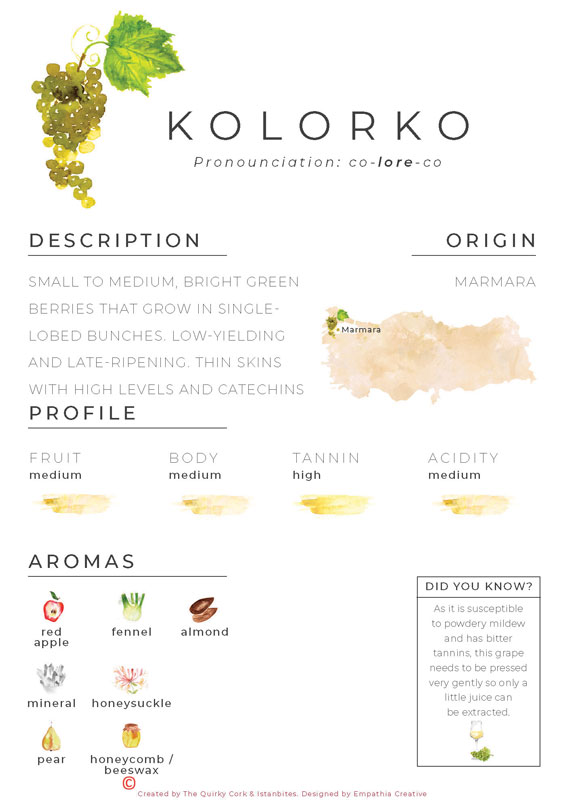
Paşaeli Wines owner Seyit Karagözoğlu both searches out grapes but also vinifies them in every way under the sun to see what they can do. In addition to working with underappreciated grapes like Çalkarası (chal-ka-ra-sih) and Yapıncak (ya-pin-juck), he’s also re-found and started to popularlize: Çakal Üzümü (cha-kahl ew-zewm-oo), Kolorko (co-lore-co), and Sıdalan (sih-da-lan).
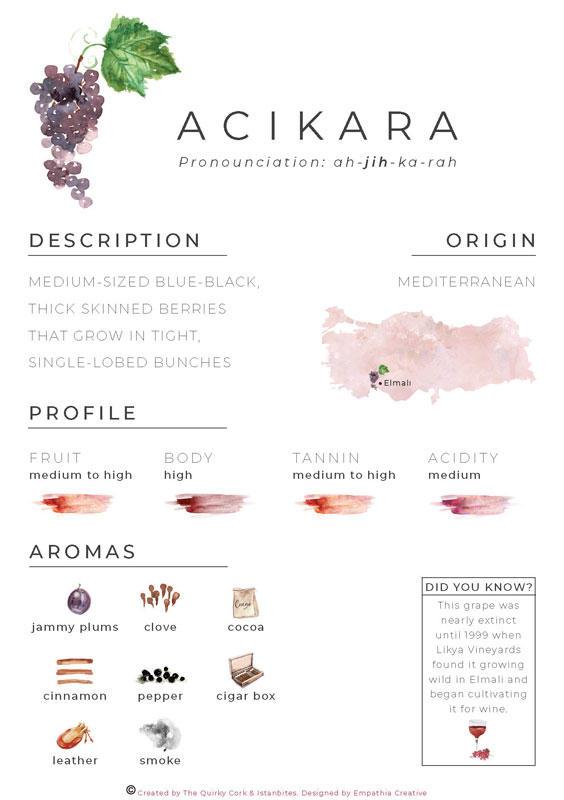
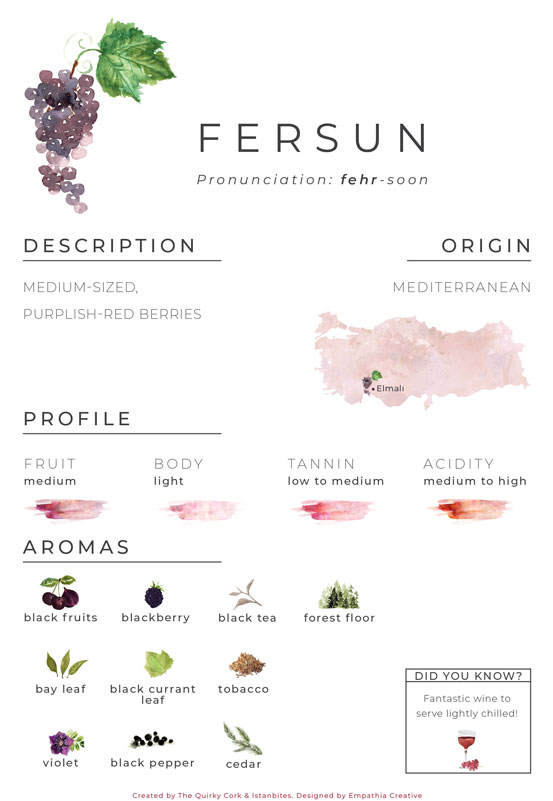
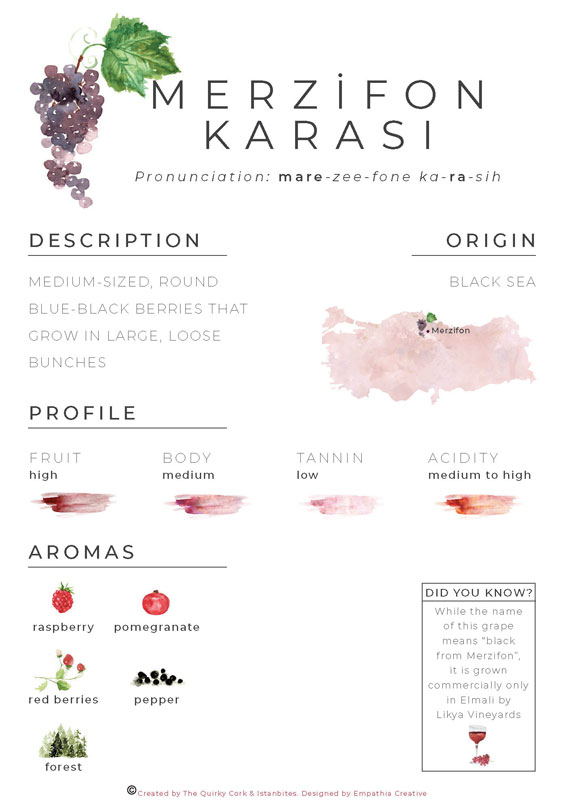
In southern Turkey near Antalya, mostly known for its beautiful beaches, Likya Şaraplar has given us three new grapes: Acıkara (ah-jih-ka-rah), Fersun (fehr-soon), and Merzifon Karası (mare-zee-fone ka-ra-sih). This family-owned and operated winery tells a very romantic story about how it discovered its first recovered grape, Acıkara. Knowing that their region has a very old wine history, they reasoned that there must have been native grapes there before. So, they began to research the area and learned through local shepherds of a large grapevine growing wild where they grazed their sheep. With the shepherds as guides they found the vine, estimated to be 200 years old, made cuttings of it, and slowly introduced it to their vineyards. Now these three grapes make up the winery’s varietal Arkeo (archeological) series.
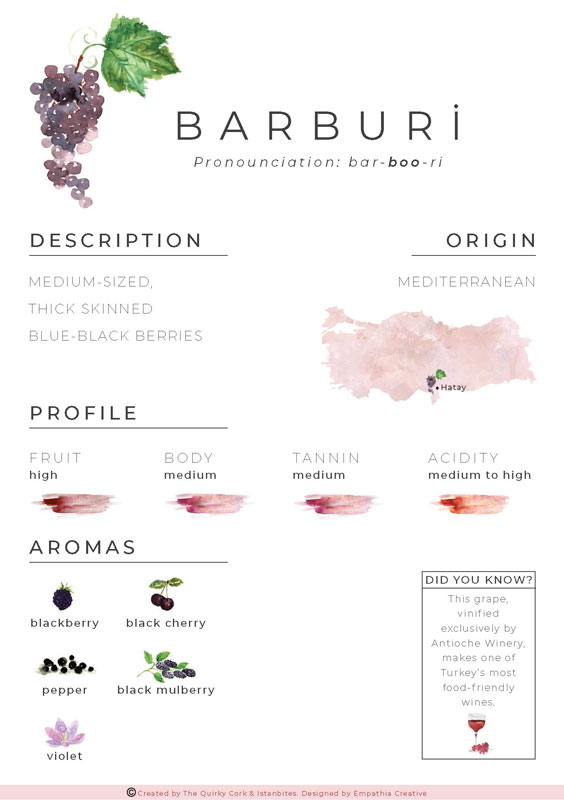
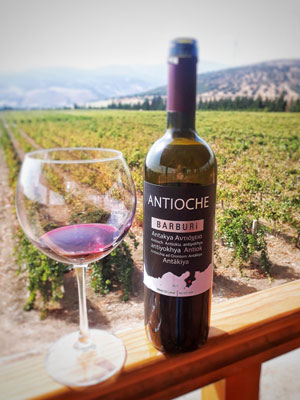
In Hatay, the food Mecca of Turkey, family-owned Antioche shares a similar discovery story with Likya. Here owner Abud Abdo was happily making wine with international grapes when a memory of his grandparents surfaced. As a child he helped them make home wine from a local grape which was also used to make pekmez (molasses). Having even gone out of style for the pekmez it took him some time to track it down. The grape, Barburi (bar-boo-ri), he found thriving wild in the forests around Hatay with the vines growing up into the trees. He now makes three wines with this grape: a Cabernet Sauvignon blend, and two varietal Barburi wines, one oaked one not.
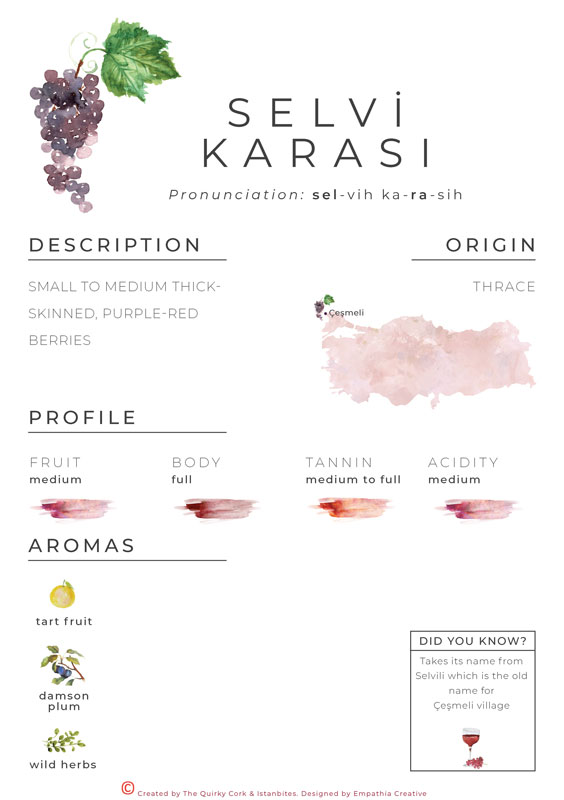
Far across the country in Turkish Thrace Chateau Nuzun owner Nazan Uzun was also wondering what happened to all the local, native grapes. She discovered Selvi Karası (sel-vih ka-ra-sih), got some cuttings from local villagers, and began planting it. To accompany this grape, she also planted Çatal Karası (cha-tahl ka-ra-sih). While not native to her area of Turkey it had made its way into village gardens and she decided to propagate it as well. Chateau Nuzun is still growing its Çatal and Selvi Karası vineyards and releases small amounts of a blend of the two.
Some grapes have been rescued through deliberate research, others by happy accident. In the heart of Öküzgözü country Kuzeybağ Şarapçılık has slowly debuted Kösetevek (kuh-se-te-vek). For years it grew alongside their Öküzgözü vines but the incredible similarity in the appearance of the two kept Kösetevek hidden even from them! Upon discovery of what they really had, Kuzeybağ first released the grape as a blend with Öküzgözü. In 2020, the winery released the first varietal Kösetevek wine followed by both a blanc de noir and rosé.
Buried in a small village outside of Ankara, Gordias Bağcılık ve Şarapçılık introduced two new grapes to us last year: Fesleğen (fes-lay-en) and Narınç (na-rihch). Gordias winery owner and winemaker Canan Gerimli produces the Fesleğen as a light weight and food friendly white wine and the Narınç (also a white grape) as a skin contact amber.
In addition to the wineries actively regenerating lost grapes, a number of other producers are pushing the limits of how we understand some of Turkey’s less wide-spread grapes.
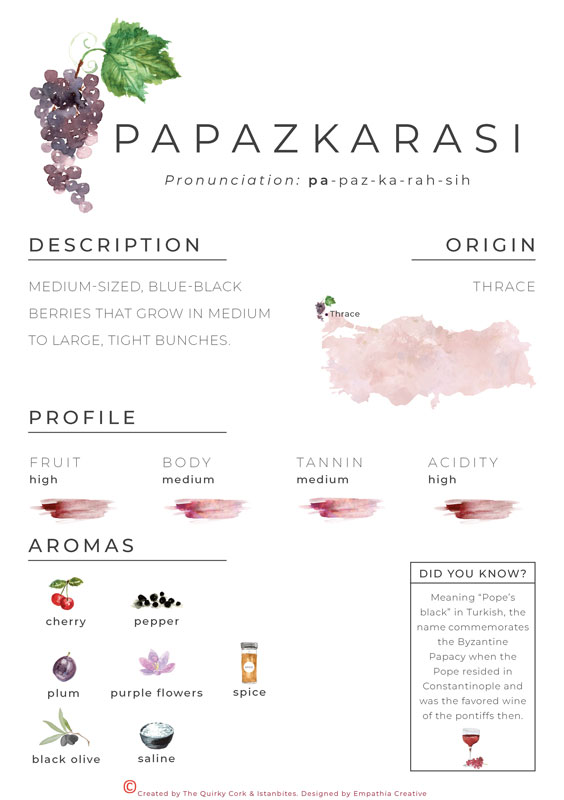
A trio of wineries in Turkey’s Thrace, Chamlija, Arda, and Edrine have over the last five years expanded our enjoyment of Papazkarası, (pa-paz-ka-ra-sih) also spelled Papaskarası. Native to the Thracian area, this grape was around but no one did much of anything with it. Thanks to these three, we now have the grape in varietal red wines of various styles, red blends, rosé, and blanc de noir wines.
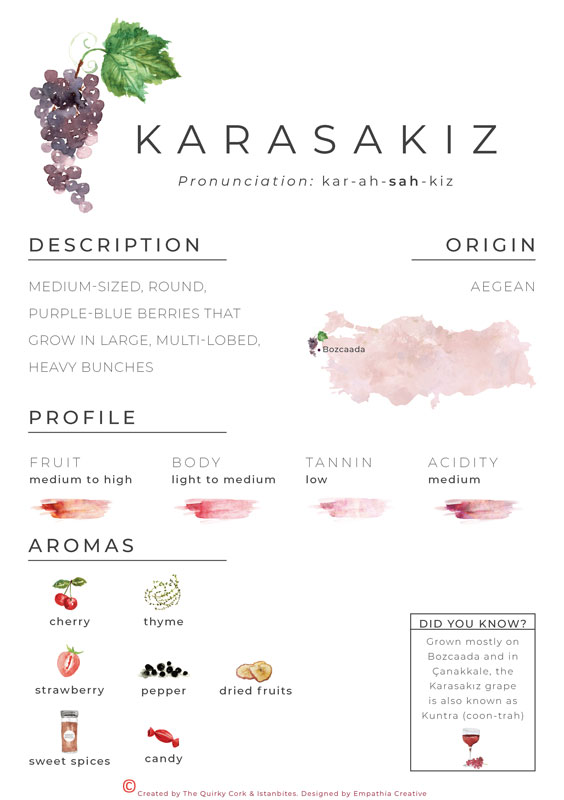
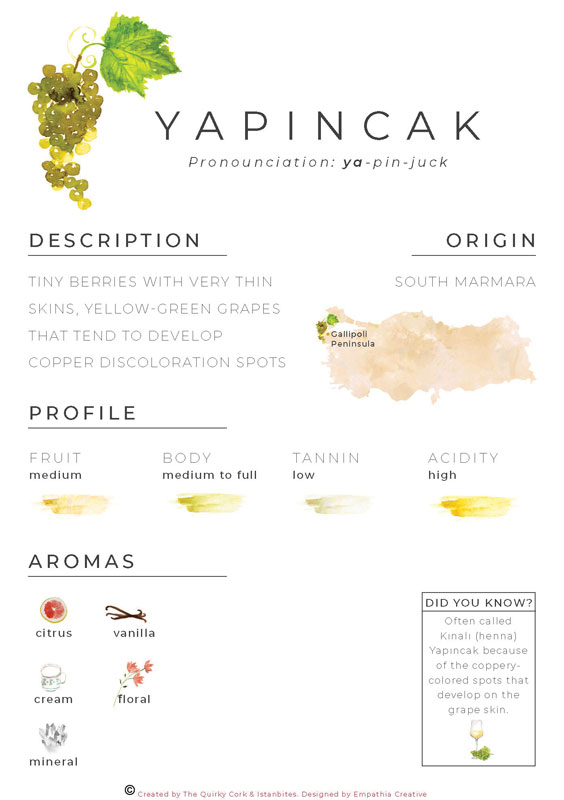
On the tip of the Gallipoli Peninsula, wine giant Suvla has done something similar with two grapes from the area: Yapıncak (ya-pin-juck)and Karasakız (kar-ah-sah-kiz), also known as Kuntra. Two, maybe three other producers use these grapes but not to the same extent as Suvla which features Yapıncak, a white grape, in a simple fresh style, a reserve oak aged wine, and a blanc de blanc traditional method sparkling wine.
With the black Karasakız, Suvla makes a savory rosé, a fresh red, a reserve oak aged red, a grand reserve red, both rosé and blanc de noir traditional method sparkling wines, AND a sweet wine!
Paşaeli Wines is also in the Yapıncak game with two different terroir unoaked wines and a skin-macerated amber wine.
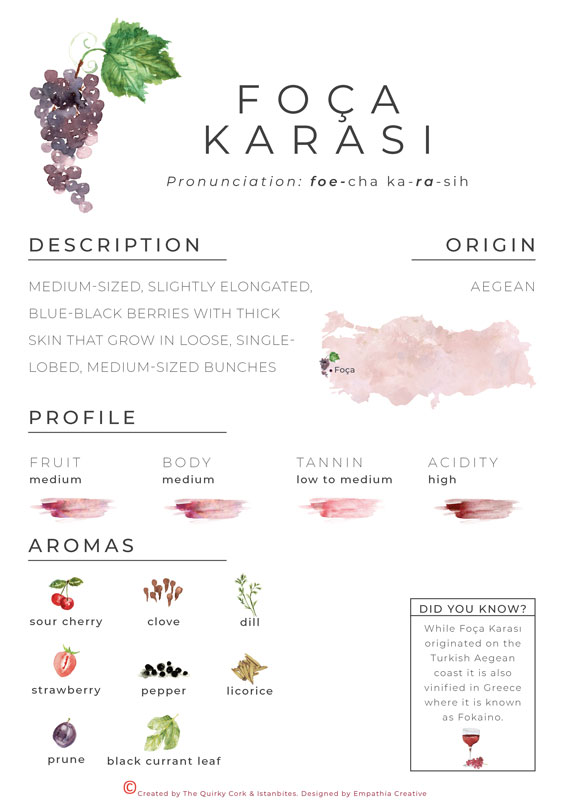
Near the city of İzmir, Öküzgözü Şarapçılık features the little known grape Foça Karası (foe-cha ka-ra-sih). The winery started by blending this grape with international varieties but as it dedicated more and more vineyard space to the grape, Öküzgözü Şarapçılık slowly introduced a varietal red Foça Karası, then a blanc de noir, and now a rosé. Ayda Bağları & Şarapçılık and USCA Bağcılık ve Şarapçılık. Also use Foça Karası but only in red blends.
Other wineries like Amadeus MMX, Büyülübağ, Çamlıbağ, Corvus, Diren, Selefkia Wines, Tasheli, Tomurcukbağ, Urla Şarapçılık, and more work with grapes little-known outside their immediate area, assist other wineries in propagating native grapes, dedicate themselves entirely to native grapes, or champion them in other ways. With their support and the growing curiosity of both winemakers and wine enthusiasts for native grapes, hopefully we will see more and more of Turkey’s 1244 grapes than these:
Black grapes: Adakarası, Acıkara, Barburi, Boğazkere, Çakal Üzüm, Çalkarası, Çatal Karası, Dimrit, Fersun, Foça Karası, Horozkarası, Kalecik Karası, Kızıl Üzüm, Karalahna, Karaoğlan, Karasakız, Kösetevek, Merzifon Karası, Öküzgözü, Papazkarası, Patkara, Selvi Karası, Urla Karası
White grapes: Ak Üzüm, Çavuş, Emir, Fesleğen, Gök, Hasandede, İt Üzümü, Kerküş, Keten Gömlek, Koku Üzüm, Kolorko, Mazrona, Narınç, Narince, Sıdalan, Sultaniye, Sungurlu, Taş Üzüm, Tek Gönyek, Vasilaki, Yapıncak.
While some of their names might be a challenge to say, they are all a joy to drink.
Unfortunately, the majority of the best Turkish wines do not make it outside the country*. There are many reasons domestically why this is so including high taxes and the high cost of exporting, and the Turkish ban on alcohol advertising makes it difficult for wineries to have an online presence to attract importers. However, I think that the biggest impediment is the dismissal of Turkish wines by international wine drinkers. Many don’t even know Turkey produces wine or they cling to the stories of poor quality. Turkish wine has improved by leaps and bounds over the last two decades and the award winning wines and array of grapes, found nowhere but Turkey, are waiting to be embraced by adventurous wine lovers in the same manner we have learned to love Assyrtiko, Furmint, Grüner Veltliner, Rkatsiteli, Saperavi, Xinomavro, and Zweigelt.
Until these wines are more widely available, Turkey is happy to host all those who come to discover the joys of the grapes for themselves!
*The UK is one exception to this thanks to London-based Taste Turkey which offers a wide selection of Turkish wines from both bulk and small scale producers: https://tasteturkey.net/prestashop/